This is default featured slide 1 title

Go to Blogger edit html and find these sentences.Now replace these sentences with your own descriptions.

This is default featured slide 2 title

Go to Blogger edit html and find these sentences.Now replace these sentences with your own descriptions.

This is default featured slide 3 title

Go to Blogger edit html and find these sentences.Now replace these sentences with your own descriptions.

This is default featured slide 4 title

Go to Blogger edit html and find these sentences.Now replace these sentences with your own descriptions.

This is default featured slide 5 title

Go to Blogger edit html and find these sentences.Now replace these sentences with your own descriptions.

Thursday, November 16, 2006

Could a United-Delta merger happen? It might

United will probably enter this merger madness that's gripping the industry at the time, some analysts predict. At a Citigroup investor conference yesterday, United's CFO, Jake Brace, said that "the industrial logic of mergers in the airline industry is so compelling... We believe mergers in the airline industry have significant synergies, and we believe the industry needs to consolidate."

He also wouldn't say much about the subject of Delta, but wouldn't rule out anything in way of a merger. "We're going to do what makes sense for our company, and we'll be interested to see what happens with US Air and Delta," Brace said.

A United-Delta merger would make much more sense from a variety of standpoints. The two airlines have more compatible fleets - both predominately Boeings - as opposed to US Airways, which has an almost all-Airbus fleet. There is also less overlap between the two airlines' hubs, compared with US Airways. United has hubs at Los Angeles, San Francisco, Denver, Chicago, and Washington, while US Airways has hubs at Phoenix, Las Vegas, Charlotte, and Philadelphia. In contrast, Delta has hubs at New York JFK, Atlanta, Cincinatti, and Salt Lake City.

Could a merger happen? It might. Analyists predict that United will place a bet for Delta, and will do so sometime soon.

Wednesday, November 15, 2006

US Airways/Delta merger update

Here’s a mid-day update (done during lunch break) about the possible Delta-US Airways merger. CNN talked to US Airways’ CEO Doug Parker, who said that his airline’s hub in Charlotte, North Carolina would remain if the two airlines were to merge. Delta’s hub in Salt Lake City would also stay, although each hub is rather close to an existing one: Delta’s in Atlanta and US Airways’ in Phoenix, respectively.

Delta has stated that it wants to remain independent, at least during its stay in bankruptcy. Delta’s CEO said that his airline’s plan “has always been to emerge from bankruptcy in the first half of 2007 as a strong, stand-alone carrier. Our plan is working and we are proud of the progress."

It increasingly looks like any takeover (or merger) of Delta by US Airways will be a hostile bid. Yet Parker thinks that he will convince Delta’s bosses and creditors that the deal is a good one: "What you're hearing right now is reaction from people who haven't yet been able to digest the offer.”

Analysts have said that in addition to US Airways, United and American could potentially be bidders for Delta as well, or at least play a part in the consolidation of the industry.

So will the merger go through? Delta says no, and the fact that it’s in Chapter 11 bankruptcy certainly complicates things. Antitrust laws are another thing to consider; an example of this is the fact that Delta and US Airways are the only two airlines flying the New York-Washington shuttle route. But if the two are merged, it would create the nation’s (and perhaps the world’s) largest airline, beating American for the number one spot.

US Airways seeking to purchase Delta

US Airways has just announced this morning that it would make an $8 billion bid (with cash and stock) for Delta Air Lines once the latter emerges from Chapter 11 bankruptcy protection. Delta creditors would get about $4 billion cash and and 78.5 million shares of US Airways stock which, based on yesterday's closing stock price, has a combined value of about $4 billion.

There isn’t much information available at this time, since the story was just released about an hour ago, but US Airways said that the deal would ‘generate $1.65 billion in annual synergies’. The combined airline would use the name of Delta, which according to US Airways' CEO, has a slightly higher brand awareness.

Thursday, November 9, 2006

Austrian Airlines to start Iraq service


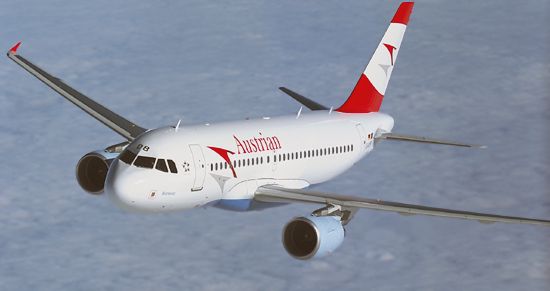
Austrian flag carrier Austrian Airlines said today that it would start flying scheduled flights to the northern Iraqi city of Erbil twice a week, starting December 11. According to the airline, the city is the 4th largest in Iraq and it is a logical new destination for its extensive Middle Eastern network - the airline claims that it is 'already the number three carrier in Europe when measured by services into the Middle East'.

The flights are on Mondays and Fridays with an Airbus A319 from Vienna to Erbil and back (flights 829 and 830).

Wednesday, November 8, 2006

Aeroflot lets 787 slots expire, retires Il-86

Russian flag carrier Aeroflot lost twenty-two production slots last week for the Boeing 787 aircraft because the government wouldn't approve its order. "The original conditions on the contract have expired... We will now be looking for other alternatives. We remain in contact with Boeing," said Aeroflot Deputy CEO Lev Koshlyakov.

Originally Aeroflot remained undecided between the A350 and the 787 and seemed like it would split its order both ways. Alexander Lebedev, owner of 30% of Aeroflot, cut a deal with Boeing to give it the production slots basically as a time extension so that Aeroflot's board could confirm the order, which it has yet to do.

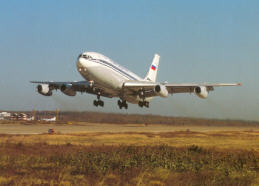
Aeroflot also announced last month that it plans to retire the Ilyushin Il-86 from service later this month. Aeroflot's Deputy Director General Igor Desyatnichenko said that the planes will be retired November 15, and that they were "too costly to keep them through the winter and fly just two or three months in the summer". He also said that the planes, which aren't very fuel efficient, didn't meet European environmental and noise regulations.

The Il-86 was introduced in 1980 and was the first Russian wide-bodied airliner. Aeroflot and other airlines have used (and continue to use) the aircraft on tourist flights to southern resort towns in the Caucasus during the summer months.

Reactions to FedEx's A380 cancelation

After FedEx's decision yesterday (see previous blog post) to cancel its A380 orders because of prolonged delays on Airbus' part, there have not been any other cancellations by other airlines ordering the A380 - as of yet.

Singapore Airlines, which will be the first airline to put the A380 into service, says that it has no plans whatsoever to scrap its order, although it will get its first A380 in October of 2007 instead of December of this year, as originally planned. The airline said that it won't be affected greatly by the delay because it's taking delivery of six Boeing 777-300ERs this month.

FedEx rival UPS, which has ten A380s on order (as well as options on another ten) said that the company isn't rushing to make a decision about whether to cancel its orders or not. "We are not pressed to make a decision," said Chief Executive Officer Mike Eskew. "Our backs are not against the wall on this issue." UPS says that it has enough planes scheduled for delivery in the next few years to avoid any problem.

Airbus company EADS also reported its first quarterly loss in three years earlier today.

Tuesday, November 7, 2006

FedEx Dumps Airbus, Goes to Boeing

Cargo delivery giant FedEx announced today that it has canceled its order for 10 A380-800F planes and instead has ordered 15 Boeing 777 (777F) freighters. Notably, this is the first A380 customer that Airbus has lost.

CEO Frederick Smith said, "The availability and delivery timing of this aircraft, coupled with its attractive payload range and economics, make this choice the best decision for Fedex." He went on to say, "Global demand for air cargo and express services continues to grow rapidly and FedEx has made significant investments in our network to meet customers' needs and fulfill our business objectives. Therefore, it was necessary and prudent for us to acquire the Boeing 777 Freighter." Simply put, FedEx needs new planes soon, not later, and if Airbus can't deliver, then they figure that Boeing will.

Right now I'm sure everyone at Boeing headquarters in Chicago is partying, but not the same in Toulouse, France - Airbus headquarters. Airbus has been facing some tough times recently, with Emirates threatening to cancel its order for 43 passenger A380s (the largest customer of the plane to date). Right now, the scheduled first delivery of the A380 to an airline will be in October 2007 - two years behind schedule.

Deliveries of the aircraft to FedEx are expected to start in 2009 and last through 2011. At the time of writing, shares of Airbus parent company EADS fell 3.05% while Boeing shares climbed 5.26%